Posts

Does depression cause brain damage? Does it make you dumber?

Image
Actually, that's a pretty interesting concept. The brain is a very,  very  complex organ, and there's so much we don't know or understand about it, however based off images of the brain taken through a PET ( Positron Emission Tomography ) scan it shows that a depressed brain is in a way “damaged”. This proves that depression isn't just something you can get over in a week, and isn't just “all in your head”, for lack of better term. (You aren't just making it up) PET scan:   As you can see, the depressed brain is  literally  different, because of the lack of chemicals like serotonin and dopamine. The brain is ill in a sense, the lack of green and yellow in the depressed brain showing the difference. Depression isn't made up, it's real, and it's serious; however, though depression is a long painful ride, it can be treated. Antidepressants and SSRI's (Selective Serotonin Re-uptake Inhibitors) can help treat clinical depression and other ...

What are some neuroscience hacks to become smarter and genius?

Image
There are no neuroscience hacks to achieve your goals. IQ is determined genetically and can be lowered by environmental factors, such as head trauma , disease, and exposure to toxins. Efforts have been made for many years to find a means of increasing intelligence. No practical means has yet been discovered (see Haier, R. J. (2017) referenced below). Intelligence is not learned nor can it be taught. IQ is 85% heritable in adults (developed nations). The environment contains two factors: C __ the things that make us more alike E __ the things that make us more different As mentioned above, the genotype increases from early childhood until adulthood. If environmental effects were potent, they would cause the opposite to happen; we would see C or E or both increasing as we age. The opposite happens. You can increase your use of your IQ by pursuing as much education as you can effectively absorb. People at all IQ levels need education to learn how to perform tasks in thei...

Why can't brain cells reproduce?

Image
A typical mature neuron has a network of hundreds if not thousands of branches connecting it to other neurons , and these connections are what determine brain function . These connections are also built up slowly over years and decades of experience and reinforcement signalling. In order to divide itself, a neuron would have to retract all these connections back into its main cell body , thus losing all its accumulated normal function. The two new daughter cells would have no connections and would thus be useless. Re-establishing such a complex network of connections to restore normal function is a staggeringly difficult task, and even if it could be done there would be a time gap in which the function would not be present. And a single mistake in rewriting can have far reaching consequences, such as seizures. Over evolutionary time as brains got ever more complex it just became more advantageous to maintain individual neurons for as long as possible, keeping their con...

Can stem cells cure or reverse neuropathy?

Image
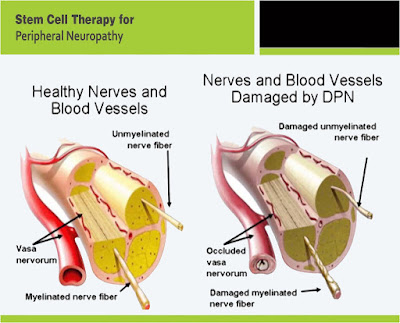
Neuropathy sufferers now have a new, minimally invasive therapy option: stem cell treatment for neuropathy. Stem cell therapy for neuropathy is an alternative, revolutionary approach to relieving your neuropathy pain and symptoms . A stem cell's primary function is to repair and regenerate damaged tissue . Most patients feel no improvement for at least 3 weeks and possible 6-8 weeks. Once you feel improvement, you will notice continued improvement expanding over 6 months. What is the recovery like after a stem cell procedure? There may be some mild soreness in the joint for up to a week after the injection. Go to my Profile and you can find all Neuropathy material there... Reference: Martha Mitchell

Neuroscience: Yes, Brain Training Actually Can Work When Done Correctly?

Image
For best results together with your own brain training you'll specialise in a couple of main points: Awareness: Once you are often increasingly conscious of your own experiences, reactions, and limitation, you'll be ready to guide your own brain training regimen. Listening to the days you grind to a halt, and therefore the experiences that you simply find the foremost upsetting will guide you better than the other diagnosis. Anger, frustration, and irritation are fantastic signposts pointing you to the exercises which will benefit you. Make it up:   You don’t need to join a gym to urge exercise and you don’t need to use professional services to exercise your brain. Do things that you simply think are hard. If you struggle with speechmaking, do that. If you're a terrible reader, do that. If you hate math, do that. Therapeutic exercise is about doing the items that are hard. Dig deeper:   Don’t have a look for reasons to elucidate your weaknesses. Sometim...

What is the difference between non receptor tyrosine kinase and receptor tyrosine kinase?

Image
After binding of the ligand, the receptor tyrosine kinase (RTK) autophosphorylates Tyrosine -> activates GRB2 -> SOS -> RAS -> downstream kinase -> transcription factors. Think  anabolic / growth factors  - Insulin, IGF-1, FGF, PDGF, and EGF Nonreceptor tyrosine kinase receptors dimerizes -> recruits JAK -> JAK cross-phosphorylate dimer -> activate STAT and dimerize it -> STAT translocates into nucleus and activates transcription. The hormones are mostly related to immunity. Think  acidophils and cytokines . A good mnemonic is PIGG (L) ET: Prolactin, Immunomodulators (cytokine, IL-2, Il-6, IFN), GH, G-CSF, Erythropoietin and Thromobopoietin The key conceptual difference here is RTK has  intrinsic  TK activity and nRTK needs to recruit JAK to have kinase activity. Reference: Kayee Tong

How do you know if you are developing Alzheimer's?

Image
Alzheimer’s disease usually is not diagnosed in the early stages, even in people who visit their primary care doctors with memory complaints. ·          People and their families generally underreport the symptoms. ·          They may confuse them with normal signs of aging. ·          The symptoms may emerge so gradually that the person affected doesn’t recognize them. ·          The person may be aware of some symptoms but go to great lengths to conceal them. Recognizing symptoms early is crucial because medication to control symptoms is most effective in the early stages of the disease and early diagnosis allows the individual and his or her family members to plan for the future. If you or a loved one is experiencing any of the following symptoms, contact a physician. Memory loss that disrupts daily life. ...

What are the differences in the following: dementia, Lewy Body dementia, and Alzheimer's?

Dementia is a category of disease, not a diagnosis. It indicates that there are problems with cognition severe enough to interfere with daily function. AD is the most common form of dementia. It is characterized by plaques (beta amyloid) that form outside the neuron, and tangles (tau tangles) that form inside the neuron. The neuron subsequently dies, and the surround structures of the brain are affected until the brain can no longer sustain life. There are three forms of AD, and one subtype. Lewy Body Dementia is the third most commonly occurring dementia. Lewy bodies are deposits of alpha-synuclein in the brain. If those deposits form and stay in the substantia nigra, it is Parkinson’s disease. If they form elsewhere in the brain, it is LBD. LBD is characterized by psychiatric features, and does not progress in the same manner as AD (which has a fairly predictable progression). LBD is misdiagnosed about 25% of the time. Having an accurate diagnosis for this form of dementia is ...

What are the signs of ADHD?

Image
Well, I must admit that  Diagnosing ADHD  isn’t just about reading symptoms and reading relate able posts. It’s much beyond that. It  requires a psychologist and various tests and behavioural observation over a period of time. It could often have overlapping symptoms with Bipolar Disorder, depression and anxiety . Psychiatrists diagnose attention-deficit hyperactivity disorder (ADHD) if the individual displays six or more of the following symptoms of inattention or six or more symptoms of hyperactivity and impulsivity. The signs must occur often and be present for at least six months to a degree that is maladaptive and inconsistent with the person’s developmental level. ADHD involves two sets of symptoms: inattention and a combination of hyperactive and impulsive behaviours- INATTENTION ·          Fails to give close attention to details or makes careless mistakes in schoolwork, work or other activities ·   ...

What are white matter and gray matter?

Image
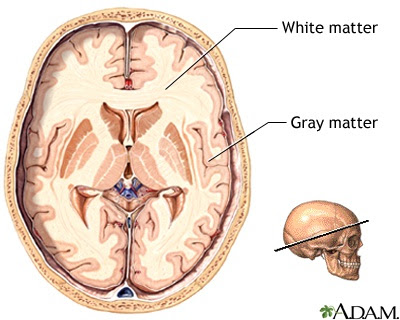
Gray matter is the part of brain where cell bodies of nerve cells reside. Normally the gray matter forms the outer part of the brain and certain islands of tissues deep within the brain like basal ganglia nuclei, thalamic nuclei etc. The axons of the cells present within these areas travelling downwards to form the white matter. They form collection of nerve cell axons which are called tracts. These tracts connect various areas of the brain. The gray matter and white matter are named due to their respective colours in the cut section of brain. Reference: Madhukar Mohan

What are brain abscesses?

Image
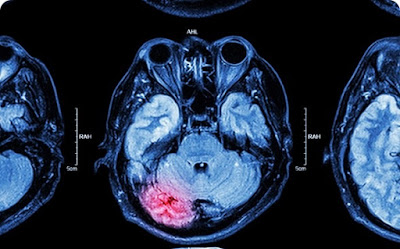
An abscess is a pocket of necrotic, degenerating tissue, often with infection, in any organ ranging from skin and gums to liver and kidneys. A brain abscess is a life-threatening condition requiring emergency intervention. It begins as inflammation and, without intervention, progresses to an abscess in about 10 days. About 25% of brain abscesses are sterile (without infection), but more often, they’re caused by pathogens such as  Streptococcus, Staphylococcus,  or  Listeria . Other causes include  Candida  and  Aspergillus  (both fungi),  Toxoplasma  (a protozoan that can be contracted from cats, undercooked meat, and unpasteurized milk), and the very rare but deadly “brain-eating amoeba”  Naegleria . Reference: Ken Saladin

What is the difference between toxic and neurotoxic venom?

Image
Neurotoxicity occurs when exposure to natural or artificial toxic substances, which are called neurotoxins, alters the normal activity of the nervous system in such a way as to cause damage to nervous tissue. This can eventually disrupt or even kill neurons, key cells that transmit and process signals in the brain and other parts of the nervous system. Neurotoxicity can result from exposure to substances used in chemotherapy, radiation treatment, drug therapies, certain drug abuse, and organ transplants, as well as exposure to heavy metals, certain foods and food additives, pesticides, industrial and/or cleaning solvents, cosmetics, and some naturally occurring substances. Symptoms may appear immediately after exposure or be delayed. They may include limb weakness or numbness, loss of memory, Neurotoxicity occurs when exposure to natural or artificial toxic substances, which are called neurotoxins, alters the normal activity of the nervous system in such a way as to cause damage to...

Do we have a limited amount of neurons? Do they regenerate or does our brain make more?

Image
There are a lot of archaic and inappropriate answers here, please disregard them. The only the one that is correct by current scientific understanding as of 2019, provided by  Xeno Rasmusson ,  is nice enough to point out that the idea of what’s valid about this topic is something that changes over time and with more knowledge and research. My own answer below will be outdated, eventually, by a better answer. I’ll skip the lesson on  how the human brain forms  in the first place and just start with what happens when it’s growing. Neurogenesis, the process by which progenitor neural stem cells migrate from the brain’s ventricular zone to various locations in the brain and mature as neurons in a network, is not just a rare or one-time event. There’s a massive spike in neurogenesis during the first few years of life, which is fairly apparent by the matter in how fast infants, of any species, cognitively mature. The rate of human neurogenesis in the brain slows consi...

Why do old people generally suffer from brain disorder?

Image
All old people suffer from brain atrophy. Some old people suffer dementia. The brain cells (neurons) you were born with are all the brains you’re going to get, and every day 1,000,000 of those precious cells die. Yet you can lose half your brain and still retain personality and memory. Every time you get drunk or concussed, you lose another million or so. Smokers’ brains atrophy quicker than non-smokers. Alzheimer’s respects neither age nor intelligence. Cherish your mental muscles. Exercise them, and don’t say ‘I don’t have the brains’ as an excuse for not wanting to do something challenging. The brain behaves like a muscle, has more connections than there are stars in the known universe, and is a miracle of nature. The brain is so complex that half of all your genes are required for its complex development. Reference: Jim Euclid

What are the main major symptoms of brain tumours?

Image
Brain resides inside a precisely pressure-controlled cavity covered by a hard skull that does not allow brain or anything inside to expand in size. When a tumour mass grows from inside this hard skull (be it from brain or from its coverings), it tries to occupy more space at the cost of space meant for the normally functioning brain. So the brain and cranial nerves emerging from it get compressed-this is called in medical parlance as “ raised intracranial tension ” (ICT). Now coming to the question, signs are what the doctor sees in the patient and symptoms are what the patient feels him/herself. All these symptoms and signs are obviously the result of raised intracranial tension. Symptoms 1.       Headache(usually the first symptom) 2.       Vomiting (sudden, projectile) 3.       Dizziness and confusion, unconsciousness in severe ICT 4.       Vision problems leading ...

What is the difference between psychiatry and Neuropsychiatry?

Image
Psychiatry is a broader field. Although it is a sub specialty of medicine, it can be considered a speciality in itself, as medical students don't have adequate exposure to psych in their MBBS days. It deals with the thoughts, mood and behavioural symptoms affecting the mind. Neuropsychiatry is a sub specialty of Psychiatry, wherein there are broad overlaps between neurology, psychiatric symptoms of neurological diseases, behavioural neurology and neuropsychology. For example, a neuropsychiatric professional would see cases like dementia, depression associated with dementia, psychiatric symptoms secondary to organic brain diseases, etc. Reference: Sriram Raghavendran